
Support shaped around one person, not a package.
Every family starts somewhere different. We build a written plan from your loved one's routine, preferences and safety needs, then adjust it as things change.

Companion Care
Conversation, shared meals, errands, appointments and simple company. The quiet, steady presence that keeps loneliness from settling in.
Loneliness is one of the biggest health risks facing older adults, and it rarely shows up on a chart. Companion care puts a familiar, vetted caregiver in the home on a regular rhythm — someone who learns how your loved one takes their coffee, which stories they like to tell, and when something feels off. Visits are built around ordinary life: a walk, a card game, a trip to the grocery store, a call with the grandkids. Families tell us the change shows up first in mood, then in appetite, sleep and willingness to leave the house.
- Friendly conversation and shared activities
- Transportation to appointments and errands
- Meal preparation and mealtime company
- Light housekeeping and laundry
Who this is right for
- Seniors living alone or newly widowed
- Loved ones who are safe at home but withdrawing socially
- Families who live out of state and want regular eyes on things
- Anyone who has stopped driving and lost their independence with it
What's always included
- Weekly written care notes shared with the family
- Grocery shopping, pharmacy pickups and mail sorting
- Escort to church, salon, senior center and social events
- Help with phones, tablets and video calls to family
Typical schedule: From 3-hour visits a few days a week up to daily companionship.
Personal Care
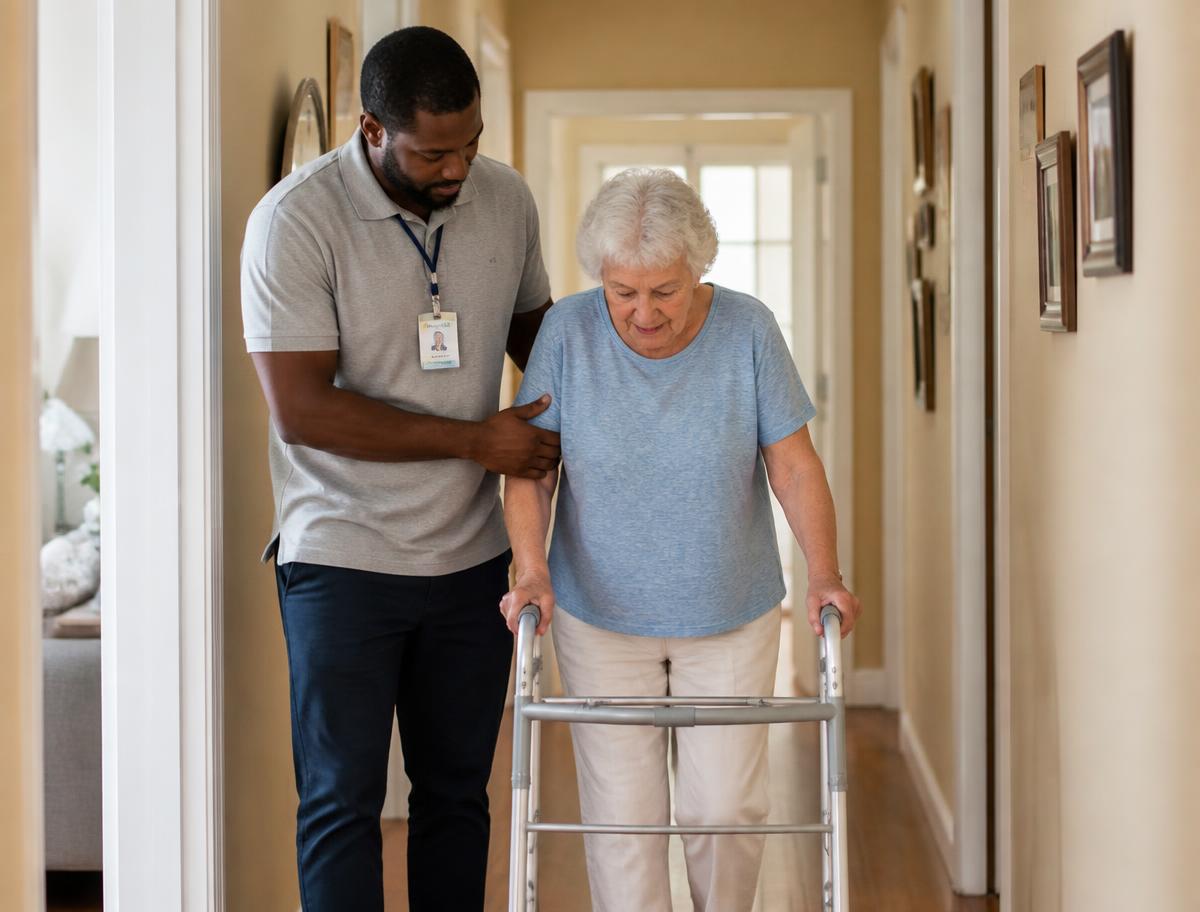
Hands-on help with the daily tasks that have become harder — always offered in a way that protects independence and privacy.
Personal care is the most intimate work we do, so we take our time with it. Before the first shift, we walk the home, note fall risks, and write a plan that describes exactly how your loved one prefers to be helped — which side they lead with, what water temperature they like, what they'd rather still do themselves. Caregivers are trained to assist without taking over, because every task a person keeps is a piece of independence they hold onto.
- Bathing, grooming and dressing assistance
- Mobility support and fall-risk awareness
- Toileting and incontinence care
- Medication reminders
Who this is right for
- Recovery after a hospital stay, surgery or fall
- Arthritis, Parkinson's, stroke recovery or limited mobility
- Anyone who has become unsteady in the bathroom
- Families who are uncomfortable providing hands-on care themselves
What's always included
- Written, individualized care plan reviewed with the family
- Fall-risk walkthrough of the home before care begins
- Transfer and gait-belt assistance where appropriate
- Skin, appetite and hydration monitoring with prompt reporting
Typical schedule: Morning and evening routines, extended shifts, or overnight coverage.
Alzheimer's & Dementia Support
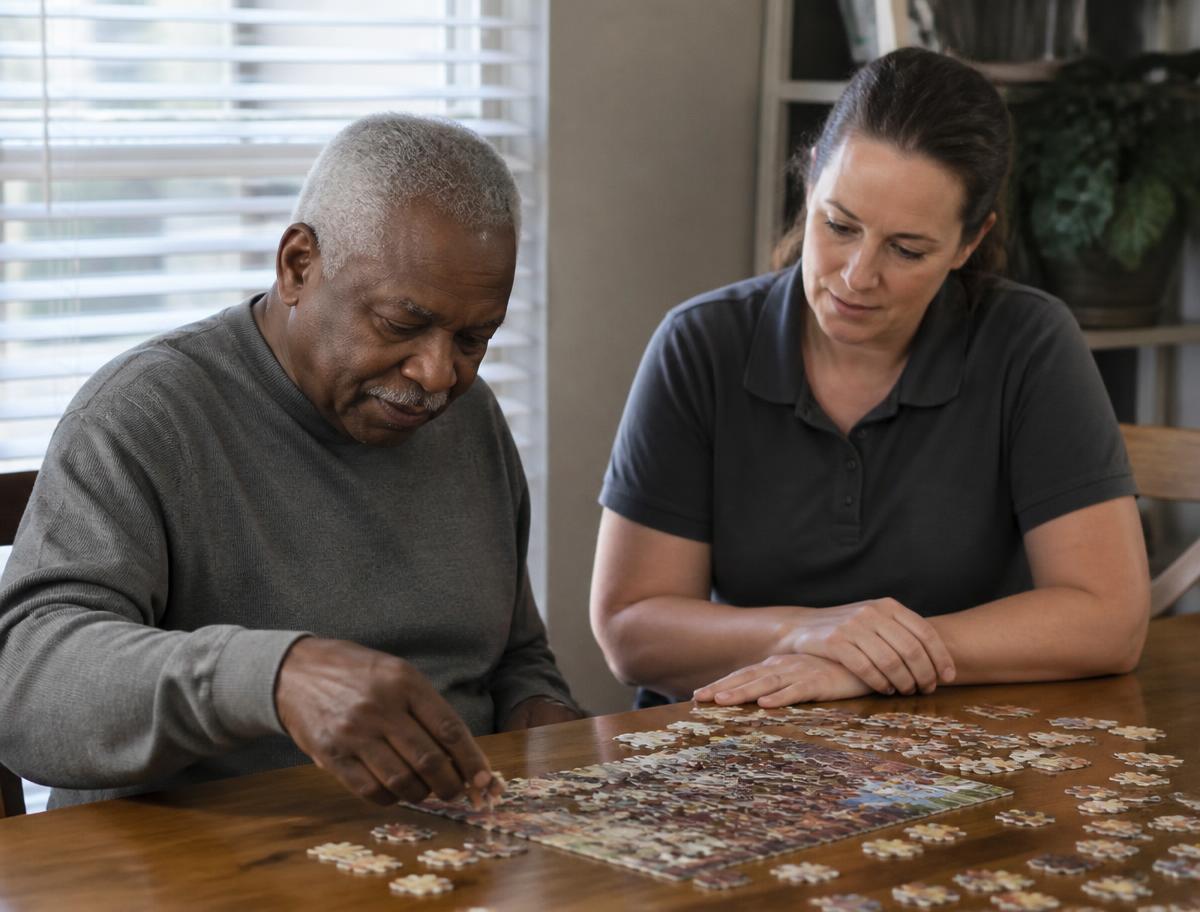
Familiar routines, patient redirection and a calm home environment for loved ones living with memory loss.
With memory loss, the environment does half the work. We keep the day predictable, the home uncluttered and the tone unhurried — because agitation is usually a response to confusion, not a symptom to argue with. Our caregivers are trained to redirect rather than correct, to enter your loved one's version of the moment, and to use music, photo albums and lifelong hobbies as anchors. We also coach families on what to say when a parent asks the same question for the ninth time.
- Consistent daily routines and gentle cueing
- Redirection and de-escalation techniques
- Safety monitoring within the home
- Engagement through music, photos and hobbies
Who this is right for
- Early to mid-stage Alzheimer's or other dementias
- Sundowning, wandering risk or evening agitation
- Spouses caring for a partner with memory loss
- Families trying to keep a loved one at home longer
What's always included
- Same-caregiver continuity whenever possible
- Structured daily routine posted in the home
- Wandering and exit-risk precautions
- Family coaching on communication and de-escalation
Typical schedule: Consistent caregivers on a fixed schedule — familiarity matters most here.

Respite & Family Relief
For the family caregiver who hasn't had a day off. Short shifts, overnights or a full week — we hold the line while you rest.
Family caregivers carry the heaviest load and ask for the least. Respite care exists so you can sleep through the night, attend your own doctor's appointment, take the trip you postponed, or simply sit somewhere quiet without listening for a door. We step in on your terms — a few hours, a standing weekly shift, overnights, or a full week — and we follow the routine you've already built rather than replacing it.
- Hourly, overnight and weekend coverage
- Post-hospital and short-term support
- Care updates for family living far away
- Flexible scheduling as needs change
Who this is right for
- Spouses and adult children providing full-time care
- Families facing burnout, illness or a work travel week
- Post-hospital transitions before long-term care is decided
- Holidays, weddings, funerals and family emergencies
What's always included
- Short-notice and emergency coverage when we have availability
- Detailed shift notes so nothing gets lost in handoff
- Updates by phone or email for family out of town
- No long-term contract required for short-term relief
Typical schedule: Hourly, overnight, weekend and short-term live-in coverage.
Let's talk about what your family needs.
Consultations are free, unhurried and never a sales pitch. Reach us for intake any day between 8:00 AM – 10:30 PM, daily.